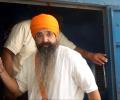
The Supreme Court has questioned the delay in the hanging of Balwant Singh Rajoana, convicted in the 1995 assassination of former Punjab CM Beant Singh, despite the Centre calling it a 'serious offence'.

A bench comprising Justices Sanjiv Khanna and Sanjay Kumar passed the remark while hearing a batch of petitions filed by former Rajya Sabha MP Subramanian Swamy, advocate Vishnu Shankar Jain and others, who have challenged the inclusion of words "socialist" and "secular" in the Preamble of the Constitution.

The Supreme Court dismissed Allahabad High Court judge Yashwant Varma's plea seeking invalidation of a report that found him guilty of misconduct in the cash discovery row.
The bench, which asked Jain to withdraw the plea filed against a Delhi high court order that dismissed a writ petition challenging the registration and recognition of the AIMIM by the Election Commission (EC), granted liberty to the petitioner to file a writ petition, wherein he may make a wider prayer for reforms in respect of political parties on different counts.

SC directs Nageswara Rao to oversee selection of new commercial partner of AIFF
The Supreme Court of India has formed a National Task Force (NTF) to address the growing concern of student suicides in higher educational institutions. The court took note of the recurring cases and directed Delhi Police to register FIRs on the complaints of families of two students who died by suicide at IIT Delhi in 2023. The NTF, chaired by former apex court judge Justice S Ravindra Bhat, will prepare a comprehensive report, including the identification of causes leading to suicides, analysis of existing regulations, and recommendations for strengthening protections. The NTF will also have the authority to conduct surprise inspections of higher educational institutions and make further recommendations to ensure a holistic approach to addressing mental health concerns and eliminating suicides.

'The directives to enhance last-mile funding, consider revival funds, and systemic reforms across the sector are expected to revive stalled projects, improve accountability, and accelerate the delivery of affordable and mid-income housing.'

The Supreme Court of India has ruled that individuals affiliated with political parties are not barred from contesting elections for bar bodies. The court dismissed a PIL seeking directions to prevent such candidates, arguing that a diverse range of ideologies is essential in a democracy and that there is no law prohibiting politically active individuals from participating in bar body elections.
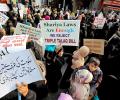
The Supreme Court on Friday said that it will set up a five-judge Constitution bench to hear pleas challenging the constitutional validity of polygamy and 'nikaah halala' practice among Muslims.
The Supreme Court of India has formed a Special Investigation Team (SIT) to investigate allegations of non-compliance with laws and irregularities at Vantara, a Green Zoological Rescue and Rehabilitation Centre in Gujarat. The SIT will examine the acquisition of animals, compliance with wildlife protection laws, and other related issues.

The Supreme Court on Monday referred to a five-judge Constitution bench a batch of pleas challenging the validity of the electoral bond scheme for political funding of parties.
The Supreme Court has ordered a CBI probe into the Karur stampede, prompting varied reactions from political parties. DMK claims misrepresentation in the petition, while AIADMK sees the decision as a setback for DMK. Other parties express their views on the investigation and its implications.
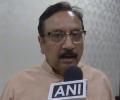
The Supreme Court on Monday pulled up Madhya Pradesh minister Kunwar Vijay Shah for not issuing a public apology over his remarks against Indian Army officer Colonel Sofiya Qureshi, saying he is testing the court's patience.
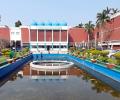
A two-judge bench of the top court in 1981 questioned the correctness of the 1967 verdict holding Aligarh Muslim University not to be a minority institution since it was created by a central law and referred the issue to a larger bench for decision.
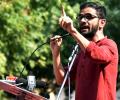
Activist Umar Khalid has appealed to the Supreme Court against the Delhi High Court's decision to deny him bail in a case under the Unlawful Activities (Prevention) Act (UAPA) related to the alleged conspiracy behind the February 2020 Delhi riots.

The Supreme Court on Monday agreed to hear on August 22 a matter involving a row between the All India Football Federation (AIFF) and Football Sports Development Limited (FSDL) over the fate of 11 Indian Super League (ISL) clubs due to the non-renewal of their contracts with the national federation and the tournament's organisers.
The Supreme Court acknowledged a clean chit from a special investigation team (SIT) regarding the Vantara zoological rescue and rehabilitation centre in Gujarat's Jamnagar, following allegations of irregularities.
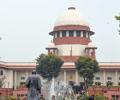
The Supreme Court on Thursday dismissed a batch of pleas seeking to review its October 2023 verdict declining legal sanction to same-sex marriage.
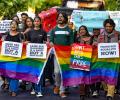
A five-judge bench of the Supreme Court will consider review pleas challenging the October 2023 verdict that declined legal sanction to same-sex marriage. The review pleas will be heard in chambers on January 9, with Justice P S Narasimha being the only member of the original bench that delivered the verdict.

The Supreme Court of India dissolved a marriage, instructing the couple to prioritize their child's well-being and set aside personal differences.
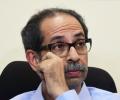
The Uddhav Thackeray-led faction of the Shiv Sena on Tuesday told the Supreme Court that a "completely unconstitutional government is being run" in Maharashtra.

The Supreme Court refused to stay a provision barring the declaration of tribal lands as waqf properties, upholding key provisions of the Amended Waqf Act.

Grappling with the intractable issue of Aligarh Muslim University's minority status, the Supreme Court said on Thursday the 1981 amendment to the AMU Act, which effectively accorded it a minority status, only did a "half-hearted job" and not restore to the institution the position it had prior to 1951.
A bench of Justices Sudhanshu Dhulia and Joymalya Bagchi, however, questioned the timing of the exercise, besides offering its prima facie view that Aadhaar card, voter ID card and ration cards could be considered during the SIR in Bihar.
'It has changed the political character of India by ejecting socialism as an ideology from the Constitution of India.'
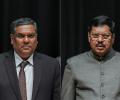
From demonetisation to sub-categorisation of Scheduled Castes to bulldozers, Justice Gavai has been part of several judgments.
The Supreme Court has granted interim protection to journalist Abhisar Sharma in an FIR lodged against him in Assam over a video post allegedly criticising the state's policies.
Presently, a five-judge Constitution bench headed by the CJI is hearing pleas relating to regimes on grant of driving license for different kind of vehicles under the Motor Vehicle Act.
The Supreme Court has deleted its critical observation against Allahabad High Court judge Prashant Kumar, clarifying that it did not intend to embarrass or cast aspersions on him. The decision follows a request from Chief Justice B R Gavai to reconsider the matter.
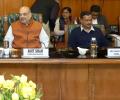
The Centre on Monday told the Supreme Court that it has filed a fresh plea seeking reference to a larger bench a matter involving a constitutional issue related to the control of services in the national capital.

In a significant development, the Supreme Court on Thursday recalled its controversial May 2 verdict that had ordered liquidation of Bhushan Power & Steel Limited (BPSL) while setting aside a resolution plan of JSW Steel Limited for the ailing firm. A bench comprising Chief Justice B R Gavai and Justice Satish Chandra Sharma observed that the May 2 judgment, authored by Justice Bela M Trivedi, since retired, did not "correctly consider the legal position as has been laid down in the catena of judgments".
The Supreme Court on Wednesday agreed to re-examine its 1998 judgment granting MPs and MLAs immunity from prosecution for taking bribe to make a speech or vote in Parliament or state legislatures.

If the TVK joins the NDA, there is every likelihood of the AIADMK winning an absolute majority in the 234 seat assembly and wanting to form a stand-alone government. In turn, it could mean that the BJP especially and the TVK equally so, will want to restrict the AIADMK's seat share closer to the cut-off figure, if only to ensure that EPS won't get the absolute majority that he desires (if the NDA won, that is) and will have to settle for a coalition government, observes N Sathiya Moorthy.

A two-judge bench of the top court had on August 11 directed authorities in Delhi-National Capital Region (NCR) to start picking up stray dogs from all localities "at the earliest" and relocate the animals to dog shelters.

A five-judge constitution bench headed by Justice SK Kaul said it will consider whether the practice of excommunication in the Dawoodi Bohra community is a "protected" practice under the Constitution.
"There is bound to be revision," the top court said, "otherwise, how will the poll panel delete the names of those who are dead, migrated or shifted to other constituencies?"

With the livelihood of nearly 5,000 people at stake, and FIFA, the Asian Football Confederation and global players' union FIFPRO keeping a close watch, the Court fixed August 28 as the next date of hearing.

These platforms carry with it the solemn duty of accountability to hold, otherwise it will imperil both the rule of law and the fabric of social harmony, the court observed.

The Supreme Court on Friday said the plea seeking a policy for verification of electronic voting machines should go before the same bench that delivered a verdict in April rejecting the demand for bringing back the old paper ballots.

The Supreme Court on Friday referred the issue of the practice of excommunication in the Dawoodi Bohra community to a larger nine-judge bench.
 © 2026 Rediff.com - Advertise with us - Disclaimer - Privacy Policy - Sitemap - Feedback - About us - Terms of use - Grievances